Scleral Lenses for Severe Dry Eye: Benefits, Suitability and Care
Learn how scleral lenses may help severe dry eye, who may benefit, what fitting involves and why safe lens care and follow-up matter.
DRY EYELIGHT SENSITIVITYSCLERAL LENSBLURRED VISIONIRRITATIONCHRONIC DRY EYESOCULAR SURFACE DISORDERSJÖGREN’S SYNDROME
Kiran Challa
3/31/20253 min read
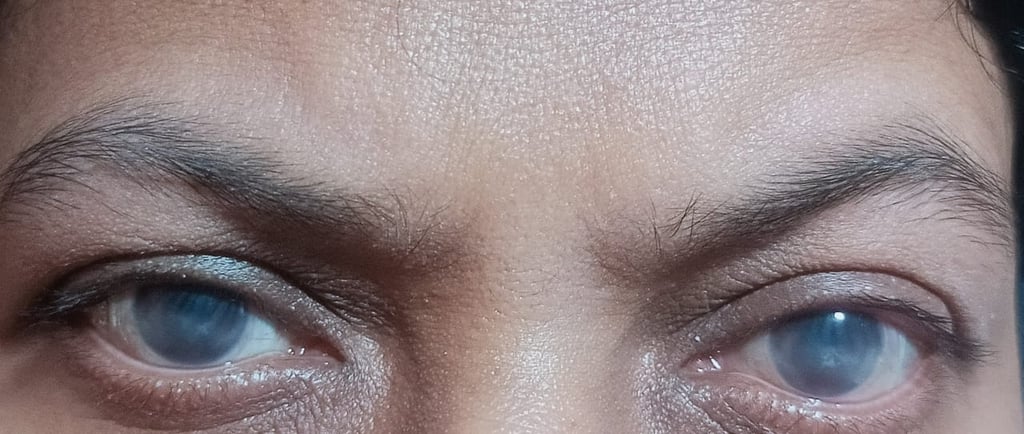
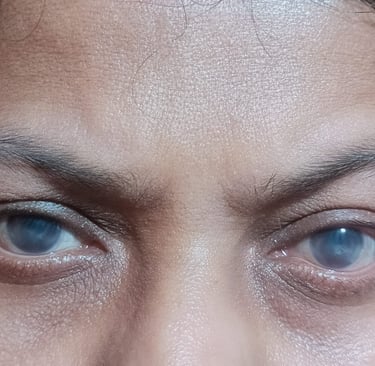
What are scleral lenses for dry eye?
Do your eyes frequently feel dry, gritty, burning or irritated? If regular eye drops provide only temporary relief, a specialist evaluation can help identify the cause and whether additional treatment is appropriate.
Scleral lenses are large-diameter, rigid gas-permeable contact lenses that vault over the cornea and are supported by the tissues over the sclera, the white part of the eye. Before insertion, the lens bowl is filled with suitable sterile, preservative-free saline. This creates a fluid reservoir between the lens and the cornea.
For selected patients with significant dry eye or ocular surface disease, scleral lenses can provide both visual correction and protection during wear. They are not necessary for everyone with dry eye.
What causes dry eye?
Dry eye develops when tear production, tear quality or tear-film stability is inadequate. Possible contributors include reduced tear production, meibomian gland dysfunction, autoimmune disease, incomplete blinking or eyelid closure, medicines, previous eye surgery and corneal nerve or surface disorders. Wind, air conditioning and prolonged screen use may worsen symptoms.
Treatment should address the underlying cause. Many people obtain satisfactory relief through lubricants, treatment of eyelid disease and other conventional therapies.
How can scleral lenses help?
Maintaining hydration
The fluid reservoir maintains a moist environment over the cornea while the lens is worn. It may reduce discomfort caused by dryness and exposure.
Protecting a sensitive surface
The lens provides a barrier that can reduce direct environmental exposure and eyelid friction over a vulnerable corneal surface. Some patients experience less irritation and light sensitivity.
Improving visual quality
An unstable tear film or irregular cornea can cause fluctuating or distorted vision. The rigid lens surface and fluid reservoir may provide a more regular optical surface. Results depend on the underlying condition and the lens fit.
When might scleral lenses be considered?
Sjögren’s syndrome and other autoimmune conditions: reduced tear production and inflammation may cause persistent dryness. Lenses may offer additional protection, but do not treat the underlying autoimmune disease.
Meibomian gland dysfunction: treatment of the eyelid glands remains important. Scleral lenses may be considered when symptoms or associated surface damage remain significant.
Persistent dryness after eye surgery: assessment is needed to identify the cause of symptoms and any corneal irregularity before recommending lenses.
Ocular graft-versus-host disease: some patients develop severe dryness and surface damage after an allogeneic stem cell transplant. Care should be coordinated with the ophthalmologist and transplant team.
Stevens–Johnson syndrome: scarring and eyelid changes can make fitting complex, requiring specialist assessment and monitoring.
Incomplete eyelid closure: a fluid reservoir may protect the cornea during prescribed waking-hour wear. The cause of exposure must also be treated.
Severe dry eye with corneal damage: selected patients may benefit as part of a wider treatment plan. Active infection, inflammation or epithelial breakdown needs specialist assessment.
Are scleral lenses a cure for dry eye?
No. They generally help manage symptoms and protect the surface during wear; they do not remove the underlying cause. You may still need prescribed anti-inflammatory treatment, lubricants, eyelid care or management of an associated systemic condition. Do not stop prescribed medicines without your clinician’s advice.
What does fitting involve?
The practitioner reviews your symptoms, medical history, medicines and previous treatment, then examines the eyelids, tear film, cornea and conjunctiva. Imaging and trial lenses may be used to assess clearance over the cornea, alignment, comfort and vision.
Fitting may take more than one visit. Training in insertion, removal and care is essential, followed by reviews to assess the eye surface and lens performance.
Safe lens care matters
Scleral lenses carry risks, including infection, inflammation, discomfort and corneal swelling. Wash and dry your hands before handling them, and follow the prescribed cleaning, disinfection and wearing schedule.
Fill the lens only with the recommended sterile, preservative-free saline. Saline does not disinfect a lens. Never use tap water or homemade saline, and avoid swimming or showering in lenses. Do not sleep in scleral lenses unless a specialist has specifically prescribed and supervised an exceptional therapeutic protocol.
Remove the lens and seek prompt eye care for pain, increasing redness, discharge, unusual light sensitivity or sudden blurred vision. Do not reinsert it until advised.
Frequently asked questions
Can scleral lenses help if eye drops are not enough?
Possibly. An examination can establish whether they offer additional benefit and whether other causes of symptoms need treatment.
Will my eyes stay comfortable all day?
The reservoir helps maintain hydration during wear, but comfort varies. Some people need adjustments, breaks or additional treatment.
How long can I wear them?
Wearing time depends on eye health, lens design and tolerance. Follow your practitioner’s schedule rather than extending wear on your own.
Arrange a specialist assessment
Persistent burning, grittiness, light sensitivity or fluctuating vision deserves assessment. At Nexus Vision Eye Care in Secunderabad, you can discuss whether a specialist dry eye and scleral lens evaluation is appropriate.
Learn about scleral lens services or contact Nexus Vision Eye Care.
About the author
Kiran Challa, Specialist Optometrist. His clinical interests include specialty contact lenses for complex corneal conditions and orthokeratology for myopia management.
This article is for patient education and does not replace an individual eye examination or professional advice.
Nexus Vision Eye Care
6-1-118, near Yellamma Temple,
Bapuji Nagar, MIGH Colony, Walker Town,
Padmarao Nagar, Secunderabad,
Hyderabad, Telangana 500020
Appointments
+91 8247710054
nexusvisioneyecare@gmail.com
Please call to confirm availability before visiting.